
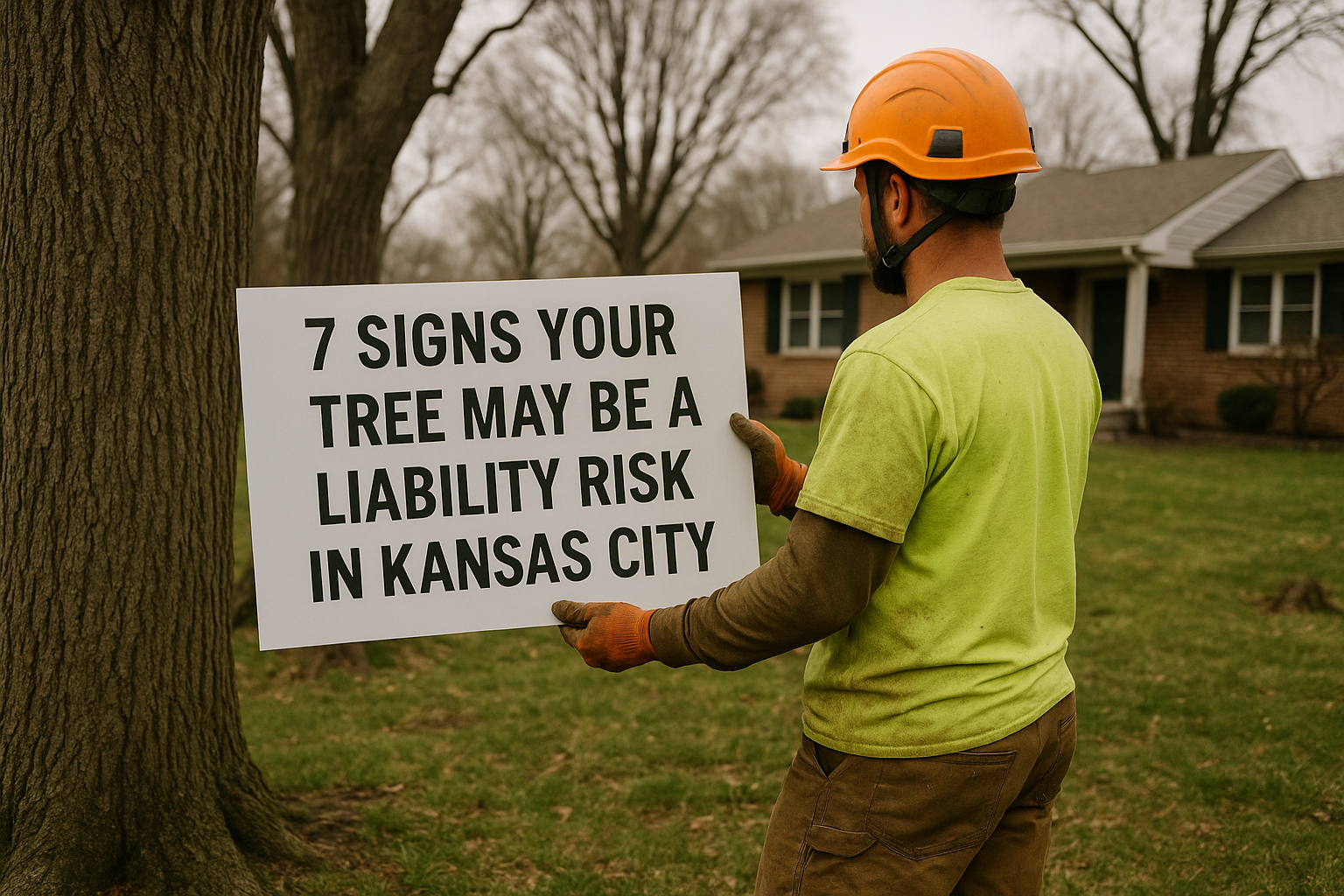
7 Signs your Tree May Be a Liability Risk in Kansas City
by gradeatreeTree Care0 comments
The environmental value of a mature canopy is undeniable. Yet, property owners overlook the structural integrity of their landscape. In regions prone to volatile weather changes, a neglected tree may transition from an asset to a legal and monetary burden. Recognize the 7 signs your tree may be a liability risk in Kansas City for preemptive risk management. Comprehend the physiological indicators of instability. Address potential failures before they result in catastrophic property damage or personal injury.
Why Are Trees At Risk?
Trees are dynamic biological organisms. They constantly respond to environmental stressors. The internal vascular system of a tree is compromised by:
- Soil compaction
- Urban construction
- Extreme temperature fluctuations
When the structural ‘engine’ (root system and trunk) of a tree is weakened, it becomes unable to support the immense weight of its canopy against high winds or heavy ice accumulation. Proactive management by our professional tree treatment in Kansas City fortifies these living structures against the physiological demands of an urban environment.
What are the Warning Signs of a Tree?
Early detection of arboreal distress requires a keen eye for abnormalities in growth patterns and bark integrity. Visual cues manifest long before a total collapse occurs.
One of the most critical indicators is ‘dieback,’ where the tips of the branches lose foliage. It signals that the tree is struggling to transport nutrients.
In addition, the presence of fungal fruiting bodies, such as mushrooms growing at the base, typically indicates internal decay that has already compromised the density of the wood.
7 Signs Your Tree May Be a Liability Risk in Kansas City
To guarantee the safety of your home and community, evaluate your landscape for some specific red flags. Learn about the 7 signs your tree may be a liability risk in Kansas City for informed decision-making regarding removal or stabilization.
Heaving Soil at the Base
If the soil is lifting or cracking on one side of the tree, it suggests that the:
- Root plate is failing
- Tree is actively leaning
V-Shaped Deep Crothes
Unlike the stronger ‘U’ shaped unions, tight ‘V’ unions between major stems are prone to splitting.
Cavities and Hollows
Large holes in the trunk serve as entry points for pathogens. They reduce the load-bearing capacity of the trunk.
Deadwood and Hanging Limbs
Even on calm days, large, brittle branches (widow-makers) can fall without warning.
Bark Abnormalities
Deep cracks that extend through the bark into the inner wood are signs of structural cleavage.
Co-Dominant Stems
Trees with two or more main trunks of similar size are inherently:
- Less stable
- More likely to fail during storms
Sudden Lean
Some trees grow naturally at an angle. A new or progressive lean indicates a critical root failure. It requires immediate professional intervention.
Ignoring the 7 signs your tree may be a liability risk in Kansas City leads to
- Significant insurance complications
- Liability claims (if the tree falls on neighboring property)
The Bottom Line
Arboricultural health is a cornerstone of responsible property ownership. Trees provide shade and beauty. But, they need consistent monitoring to ensure they do not become hazardous. Identify the 7 signs your tree may be a liability risk in Kansas City. Take a proactive step towards safety.
Grade-A Tree Care specializes in identifying such subtle biological cues. We provide the necessary interventions to mitigate risk. Do not wait for a storm to reveal the weaknesses in your landscape. Learn about the 7 signs your tree may be a liability risk in Kansas City today for a safer environment for tomorrow.
Professional Tree Care in Kansas City
Keep your trees healthy year-round with our Annual Tree Care Program. For $75/year, get expert inspections, pruning advice, and priority scheduling. Serving the Kansas City metro area.
Learn about the Annual Tree Care Program
0 Comments
Add a comment