
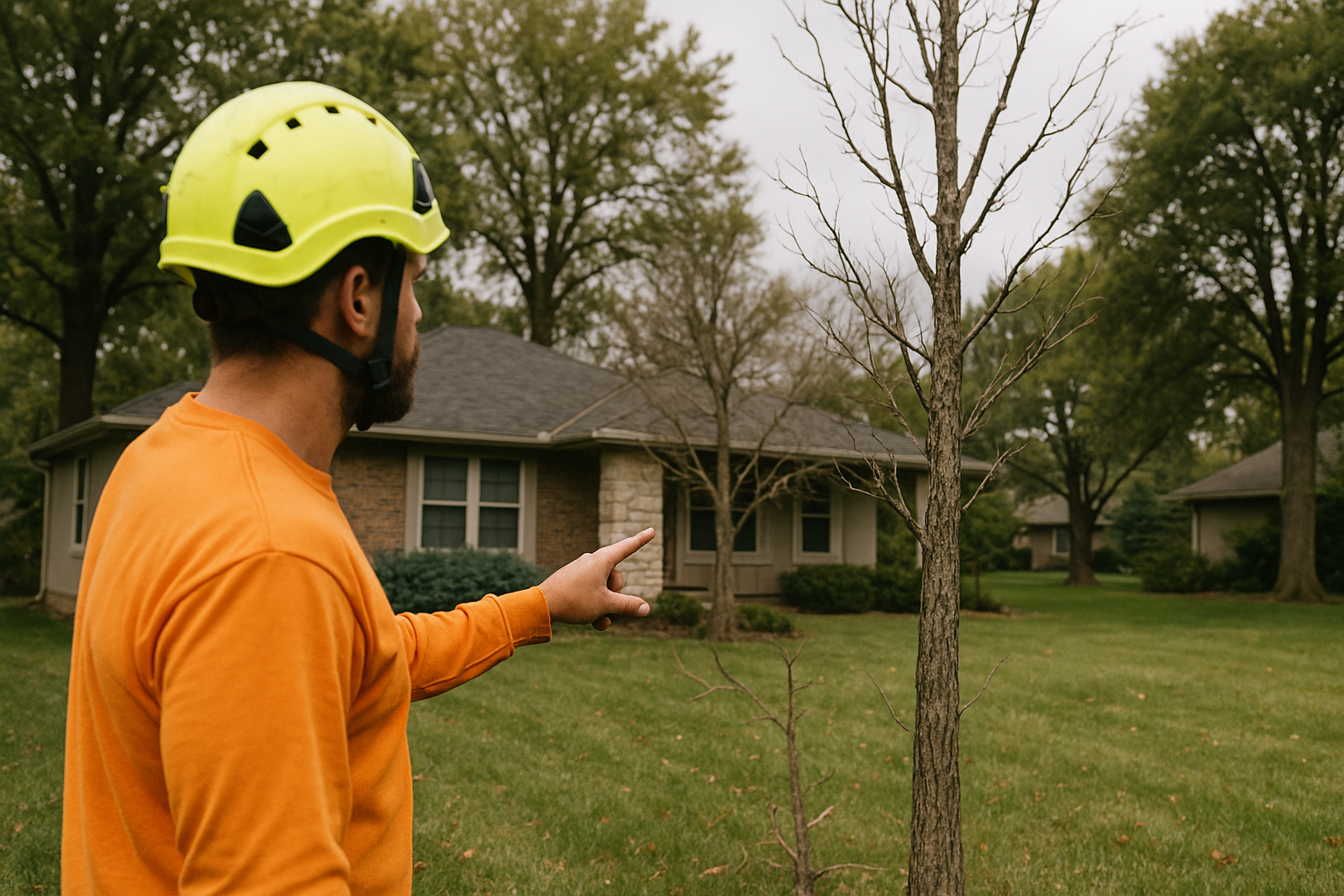
How to Identify Dead or Dying Trees
by gradeatreeTree Care0 comments
Learning how to identify dead or dying trees is not just for pros. It is a survival skill for your property. A little observation now saves you from a massive insurance claim later.
Trees don't just ‘quit’ overnight. They send out SOS signals long before they come crashing down on your driveway. If you are staring up at a branch and wondering if it is just sleeping or actually gone, you need a strategy.
What is a Dead Tree Called?
In the woods, a dead standing tree is a ‘snag.’ It is great for woodpeckers. But, in your front yard, it is a liability.
Whether the tree is a complete goner or just struggling, ignoring it will not make it grow back. Most homeowners look for tree care services in Kansas City after realizing that it is too late; a snag is essentially a ticking time bomb of brittle timber.
Is a Dead Tree Dangerous?
Yes.
When the sap stops flowing, the wood turns into a giant, vertical cracker. It loses its ‘flex’ - the next big gust of wind could be the one that snaps a limb.
When searching for how to identify dead or dying trees, keep an eye out for ‘widow-makers’ - heavy, dead branches hung up in the canopy just waiting for gravity to take over.
At What Point is a Tree Considered Dead?
A tree is officially ‘done’ when the cambium layer - that thin, green vein of life under the bark - turns brown and dry. If you cannot find a single green streak under the bark on any branch, the vascular system has collapsed.
If you check out Grade-A Tree reviews, you will see that most people call for help once they notice the crown is completely bare while everything else is blooming.
How to Identify Dead or Dying Trees?
Do not wait for the tree to fall over to decide it is sick. You need to look for the ‘Big Three’ signs of decline:
- Structural cracks
- Fungal growth
- Crown dieback.
The Scratch and Snap Test
The easiest way to check is the scratch test. Use your thumbnail or a pocketknife to nick a small twig. If it is green and moist, there’s hope. If it snaps like a pencil and looks like kindling inside, that section is dead.
If this brittleness has moved from the tips down to the main trunk, you are looking at a terminal situation.
Fungus and Trunk Trauma
Mushrooms growing out of the trunk are not ‘cute’ at all. They are eating the tree from the inside out. Specifically, shelf fungi or ‘conks’ indicate that the heartwood is rotting. This internal decay is a primary factor when learning how to identify dead or dying trees. It proves the structural ‘skeleton’ of the tree is being digested by organisms.
The Bottom Line
Spotting a hazard early is the difference between a simple prune and a total removal. If your trunk is oozing, your bark is falling off in sheets, or the top of the canopy looks like a skeleton, it is time to act. Knowing how to identify dead or dying trees gives you the upper hand. Reach out to Grade-A Tree Care to get a professional eyes-on assessment before the next storm makes the decision for you.
Professional Tree Care in Kansas City
Keep your trees healthy year-round with our Annual Tree Care Program. For $75/year, get expert inspections, pruning advice, and priority scheduling. Serving the Kansas City metro area.
Learn about the Annual Tree Care Program
0 Comments
Add a comment