
Best Fertilizer for Trees Kansas City
by gradeatreeTree Care0 comments
To achieve a lush landscape, you need to fulfill the unique nutritional needs of your canopy. Finding the best fertilizer for trees Kansas City involves more than just a trip to the local garden center. You must balance local soil chemistry with seasonal timing. The right nutrients act as the foundation for long-term health and structural integrity.
Soil Challenges in the KC Metro Area
The ground beneath us is primarily composed of heavy, compacted clay. This dense structure traps moisture. But, it lacks the necessary pore space for oxygen and nutrient movement.
Clay tightly binds certain minerals. This is why the trees may struggle to access the food they need which leads to stunted growth. An effective treatment plan addresses such "tight" soil conditions.
Best Fertilizer for Trees Kansas City
Grade-A Tree Care focuses on science-based solutions that penetrate the tough local clay. The best fertilizer for trees Kansas City conditions requires a slow-release, high-nitrogen formula with a balanced ratio like 3:1:2 or 4:1:2.
Minerals
Benefits
Nitrogen (N)
Essential for lush, green leaf production and canopy density
Phosphorus (P)
Critical for root development, especially in newly planted specimens
Potassium K)
Enhances overall disease resistance and drought tolerance
Note: Our specialized blends also include micronutrients like iron and manganese, which are frequently locked away in alkaline soils.
When to Fertilize Trees in Missouri and Kansas?
For nutrient absorption, time is everything. The most effective windows are:
- Early spring, just before the new growth flush
- Late fall after the leaves have dropped
Fall fertilization is particularly beneficial. It allows roots to soak up nutrients during their active growth phase while the rest of the tree is dormant. Consult with tree care experts in Kansas City to establish a schedule tailored to your specific species.
How to Identify Nutrient Deficiencies in Local Tree Species?
Keep a close eye on your foliage. The classic signs of a “hungry” tree are:
- Yellowing leaves with green veins (chlorosis)
- Unusually small leaf size
- Premature leaf drop
If the trunk growth has slowed to less than six inches a year, it is time for a professional soil test. Check Grade-A Tree reviews to see how our diagnostic approach has helped neighbors identify such "hidden" hunger signs before they lead to permanent decline.
Professional Deep Root Fertilization vs. DIY Surface Spreading
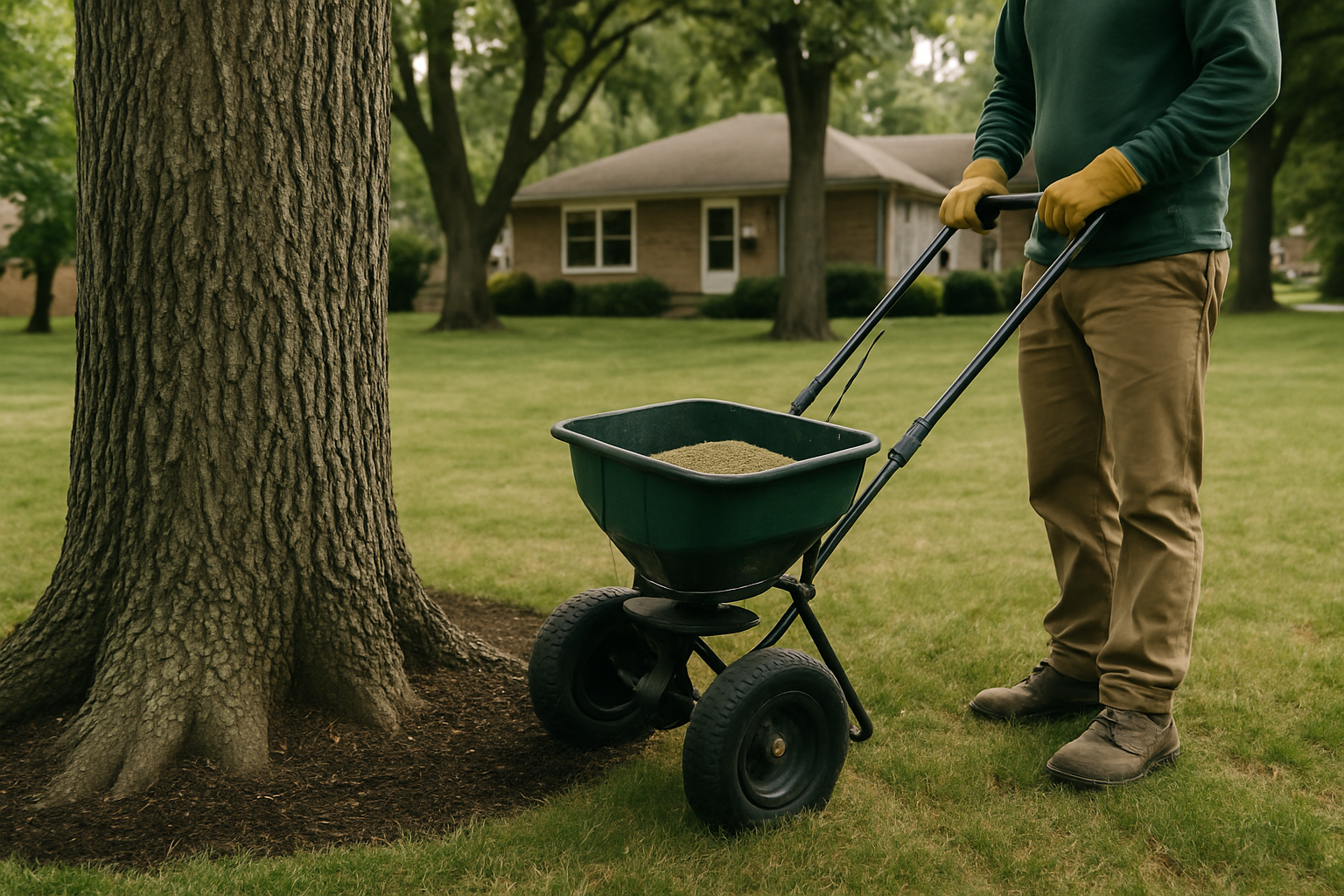
Surface-applied spikes or granules fail because the nutrients are intercepted by turfgrass or cannot penetrate the clay.
Professional deep root fertilization uses pressurized equipment to inject liquid nutrients 4 to 12 inches below the surface. This method bypasses the grass roots and delivers the best fertilizer for trees Kansas City professionals use directly to the "feeder roots" where it is needed most.
Organic Alternatives for Eco-Conscious KC Gardeners
For a natural approach, organic amendments can improve soil structure over time. For instance:
- Composted manure
- Bone meal
- Kelp meal
Natural substances release nutrients more slowly than synthetic blends. They foster a healthy microbial environment. Use organic matter to loosen compacted clay. The roots will also breathe and expand naturally.
The Bottom Line
Investing in the health of your landscape pays dividends in property value and environmental beauty. Choose the best fertilizer for trees Kansas City to ensure your yard remains a resilient sanctuary for years to come.
Professional Tree Care in Kansas City
Keep your trees healthy year-round with our Annual Tree Care Program. For $75/year, get expert inspections, pruning advice, and priority scheduling. Serving the Kansas City metro area.
Learn about the Annual Tree Care Program
0 Comments
Add a comment