
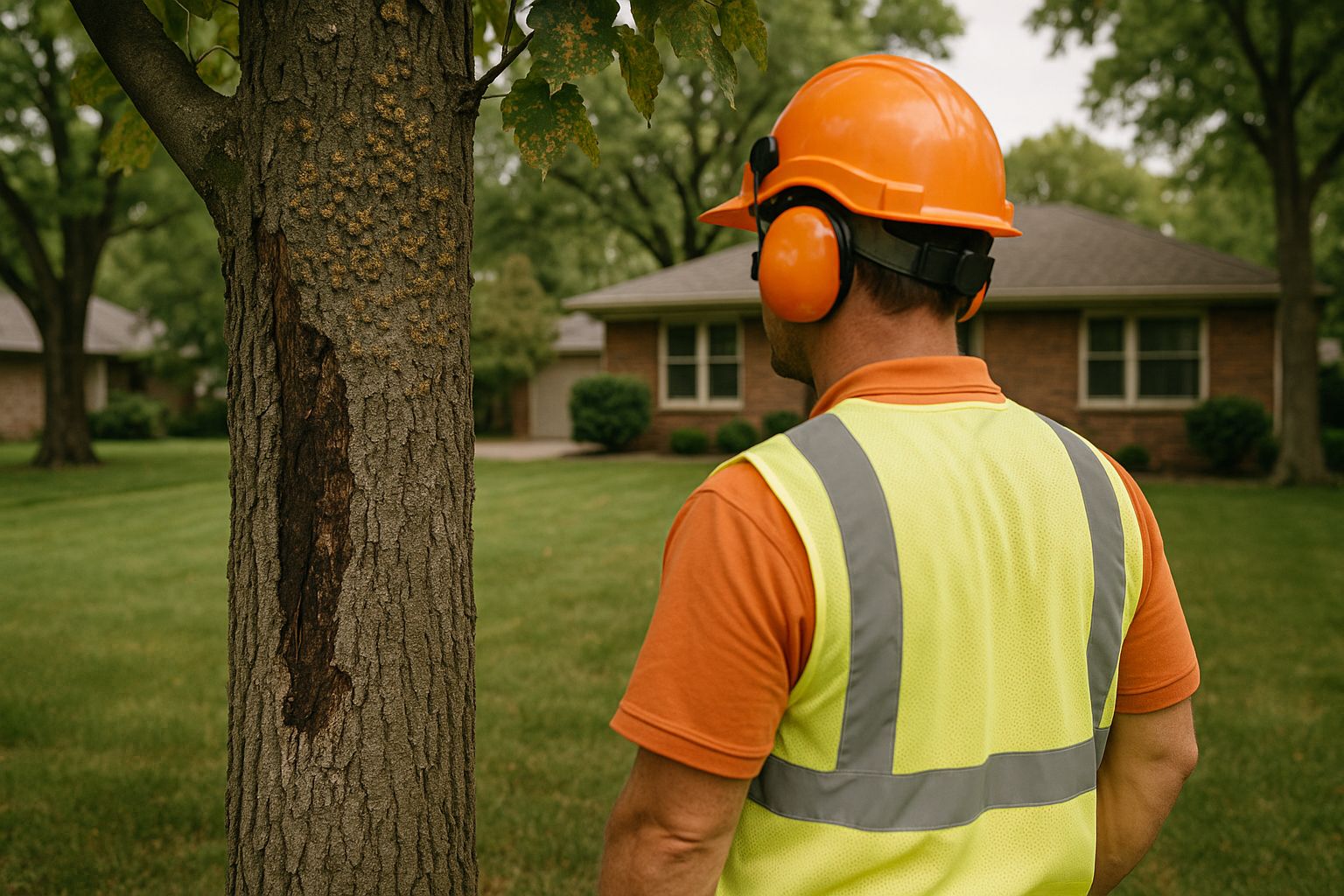
Common Tree Diseases in Kansas City and How to Prevent Them
by gradeatreeTree Care0 comments
Maintaining a lush canopy in the Midwest requires more than sunlight and water. It demands a strategic defense against silent pathogens. Property owners find themselves blindsided by urgent leaf drop or browning needles. They are unaware that the culprit is a preventable infection.
Studying common tree diseases in Kansas City and how to prevent them ensures that your landscape does not become a casualty of the shifting climate. Identify specific symptoms early. Implement biological safeguards that protect your investment and the local ecosystem.
Why the Metro’s Canopy is Under Siege And Why You Should Care?
Our urban forest acts as a natural cooling system. Yet, it is currently under a microscopic embargo. High humidity levels and fluctuating spring temperatures create a ‘Goldilocks zone’ for fungal spores. When these diseases take hold, they do not just ruin aesthetics. They compromise the structural integrity of the tree. They turn a majestic oak into a high-risk liability. Proactive management is the only way to bypass the high costs of emergency removal and habitat loss.
Common Tree Diseases in Kansas City
Oak Wilt: The Silent Killer of the Northland
This vascular disease behaves like a botanical stroke. Fungi plug the water-conducting vessels of the tree. They cause the leaves to wilt from the top down. To stop the spread, avoid pruning oaks between April and July when sap-feeding beetles are most active.
Dutch Elm Disease: A Historic Rivalry
This fungus remains a persistent threat to American Elms. It is carried by bark beetles. Look for ‘flagging’ - yellowing leaves on individual branches - which serves as an early warning. The primary modes of defense are:
- Rapid sanitation
- Systemic fungicide injections
Pine Wilt: The Evergreen’s Kryptonite
Unlike fungal issues, this is caused by the pinewood nematode. It targets non-native pines, specifically
- Scots
- Austrian varieties
Once a tree is brown, it becomes a reservoir for the parasite. Immediate removal and destruction of the wood are mandatory to protect neighboring evergreens.
Cedar-Apple Rust: The Orange Alien Ooze
In wet springs, you may spot gelatinous orange galls on Junipers. This fungus requires two hosts to complete its life cycle. It rarely kills the tree. Still, it can cause significant defoliation on apple and hawthorn trees. This is why cedar-apple rust requires targeted localized treatments.
Anthracnose: The Sycamore’s Spring Struggle
This fungal group thrives in cool, wet weather. It causes unsightly blotches and ‘witch’s brooms’ (tufts of distorted growth). Usually, mature trees do recover. But, repeated stress can weaken them. Improve airflow through the canopy to reduce spore germination.
How to Keep Your Kansas City Trees Out of the Woodchipper?
Soil Management & Proper Mulching
Prevention begins at the root. Avoid ‘mulch volcanoes’ that trap moisture against the bark, inviting decay. Instead, use a donut-shaped application of organic mulch to:
- Regulate soil temperature
- Provide a slow-release nutrient boost
Strategic Pruning
When dealing with common tree diseases in Kansas City and how to prevent them, surgical precision is key. Always sterilize your tools between cuts with a 70% isopropyl alcohol solution. Pruning during the dormant winter season reduces the risk of attracting disease-carrying insects to fresh wounds.
Irrigation Intelligence for the Midwest
Over-watering can be as lethal as drought. Deep, infrequent watering encourages deep root systems that are more resilient against stress. Ensure your irrigation system targets the drip line (and not the trunk) to prevent fungal ‘splatter’ onto the foliage.
When to Call the Pros: Finding a Certified Arborist in Kansas City
Visual DIY inspections have their limits. When symptoms persist or structural cracks appear, consult with tree care experts in Kansas City. Our professionals utilize advanced diagnostic tools to differentiate between nutrient deficiencies and aggressive pathogens. Partner with Grade-A Tree Care so that your interventions are backed by arboricultural science instead of guesswork!
The Bottom Line
A proactive approach to tree health is the difference between a thriving landscape and a barren yard. Integrate soil science, proper pruning techniques, and professional monitoring to neutralize the threats posed by common tree diseases in Kansas City and how to prevent them. Safeguard your canopy today so that it remains a legacy for tomorrow.
Check our local Grade-A Tree reviews. These feedbacks provide insight into how specific disease outbreaks were successfully mitigated in your neighborhood.
Professional Tree Care in Kansas City
Keep your trees healthy year-round with our Annual Tree Care Program. For $75/year, get expert inspections, pruning advice, and priority scheduling. Serving the Kansas City metro area.
Learn about the Annual Tree Care Program
0 Comments
Add a comment