
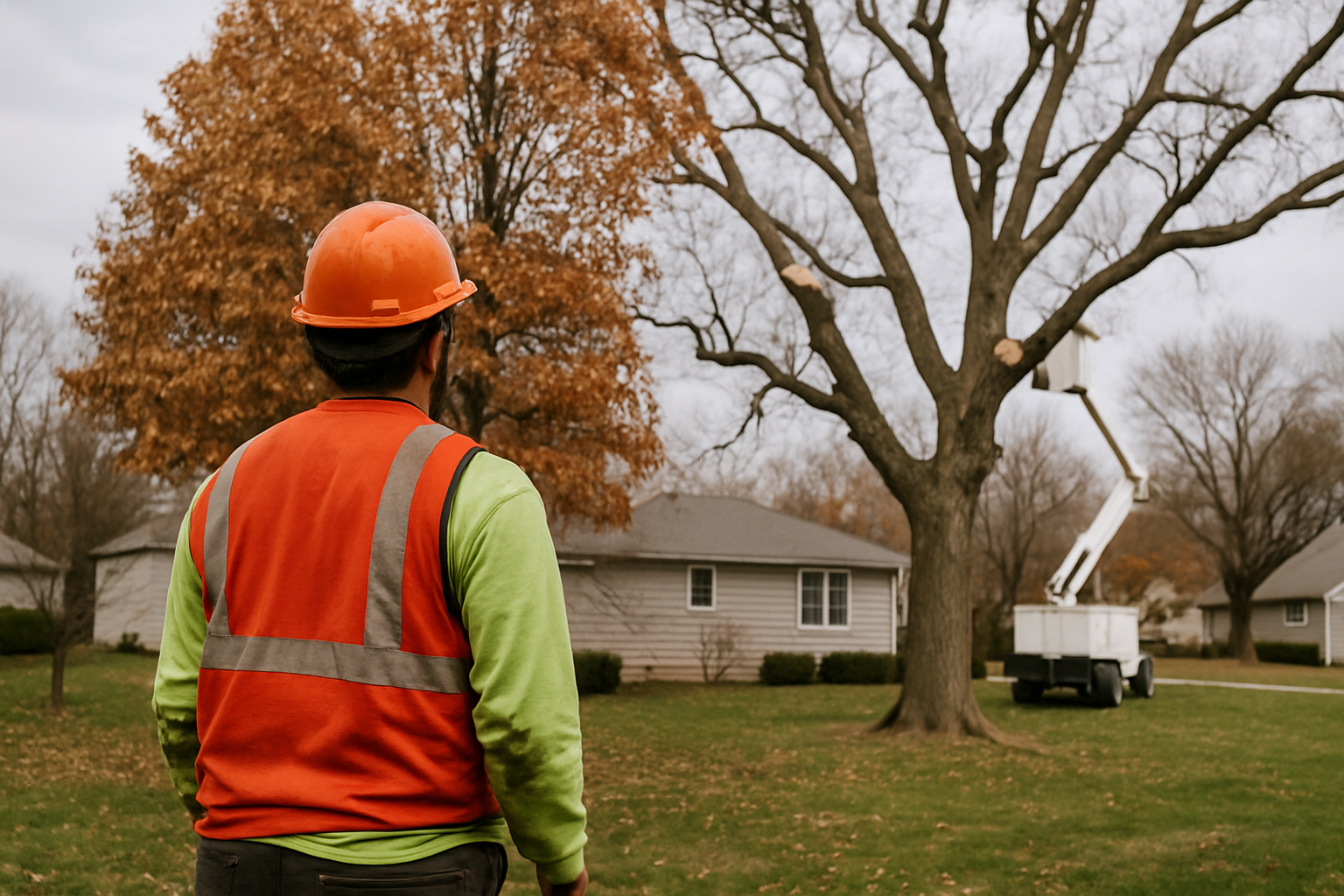
How Kansas City Weather Affects Tree Health Throughout the Year
by gradeatreeTree Care0 comments
One of the most critical aspects of property management is recognizing how Kansas City weather affects tree health throughout the year. Prior knowledge ensures long-term survival and resilience against the elements.
To maintain a vibrant canopy, homeowners should know how local environmental changes influence physiological growth. From the heavy ice of winter to the intense thermal stress of July, seasonal transitions dictate the structural integrity and nutrient absorption of your greenery.
How Trees Control the Weather in Kansas City?
Atmospheric conditions dictate tree growth. But, the relationship is reciprocal.
Large canopies create microclimates that provide significant transpiration and shade. This can decrease ground temperatures by several degrees. This natural cooling effect mitigates the ‘urban heat island’ impact seen in developed areas.
To maximize these environmental benefits, many homeowners consult with tree care in Kansas City to strategically plant and prune species that offer the best thermal regulation for their specific landscape.
How is Temperature Affecting the Trees in Kansas City?
Fluctuating temperatures, particularly the ‘freeze-thaw’ cycles of early spring, pose a serious threat to vascular tissues. Rapid warming followed by a sudden frost can cause ‘sunscald’ or frost cracks; the bark splits due to the expansion and contraction of water within the trunk.
Monitoring such thermal shifts is essential, as how Kansas City weather affects tree health throughout the year depends on how well a tree has been hydrated before a deep freeze or a record-breaking heatwave.
What Trees are Affected By Climate Change in Kansas City?
Species that were once considered hardy to the region are increasingly vulnerable to shifting precipitation patterns and rising nighttime temperatures. For instance:
- Maples
- Pines
As hardiness zones migrate, native oaks and hickories generally show more resilience. Though, they are still susceptible to secondary pests that thrive in warmer climates.
Go through Grade-A Tree reviews to have an insight into how professional soil management and preventative treatments help such vulnerable species adapt to a changing environment.
How Kansas City Weather Affects Tree Health Throughout the Year?
The annual cycle brings unique challenges that require proactive intervention instead of reactive repairs.
Spring Saturation
Heavy spring rains can lead to soil compaction and root rot. Professional aeration ensures that roots can breathe despite the high moisture levels.
Summer Drought Stress
High heat increases the rate of evapotranspiration. Without deep-root watering, trees may enter early dormancy. They may start shedding leaves prematurely to conserve energy.
Autumn Preparation
This is the season for structural pruning. Removing deadwood before winter prevents heavy snow-loading from causing catastrophic limb failure.
Comprehending how Kansas City weather affects tree health throughout the year allows for the implementation of a ‘dormant-season’ care plan. This reduces the risk of disease transmission while the tree is not actively growing.
The Bottom Line
Proactive maintenance is the only way to safeguard your investment against the volatile Midwestern climate. Partner with Grade-A Tree Care to implement custom fertilization and pruning schedules tailored to the local environment.
Staying informed on ‘How Kansas City weather affects tree health throughout the year?’ ensures that your landscape remains a safe, beautiful, and cooling asset for decades to come.
Professional Tree Care in Kansas City
Keep your trees healthy year-round with our Annual Tree Care Program. For $75/year, get expert inspections, pruning advice, and priority scheduling. Serving the Kansas City metro area.
Learn about the Annual Tree Care Program
0 Comments
Add a comment