
How to Protect Trees From Storm Damage in Kansas City
by gradeatreeTree Care0 comments
To test the structural integrity of urban forest, the rhythmic cycle of seasons in the Midwest brings a specific brand of atmospheric turbulence. Homeowners should know how to protect trees from storm damage in Kansas City; it is not merely a matter of aesthetics but a vital component of property safety and environmental stewardship. Integrate scientific pruning methods and proactive health management to reduce the risk of catastrophic limb failure during peak storm seasons.
Why Kansas City Trees Fail in High Winds?
Trees fail due to structural defects instead of sheer force of nature alone. In the local region, ‘V-shaped’ branch unions are a primary culprit. These narrow attachments lack the ‘U-shaped’ ridge of strong wood necessary to distribute wind load effectively.
‘Lion’s tailing’ refers to the improper removal of interior branches. It shifts a tree's center of gravity upward which turns the canopy into a high-tension sail.
When combined with the saturated soils common in Missouri and Kansas, these mechanical flaws lead to uprooting or trunk splitting. Maintain high standards of tree care in Kansas City to identify these hidden vulnerabilities before the first thunderclap.
How to Protect Trees From Storm Damage in Kansas City?
Scientific mitigation starts with structural pruning. This involves thinning the outer canopy to allow wind to pass through instead of pushing against it.
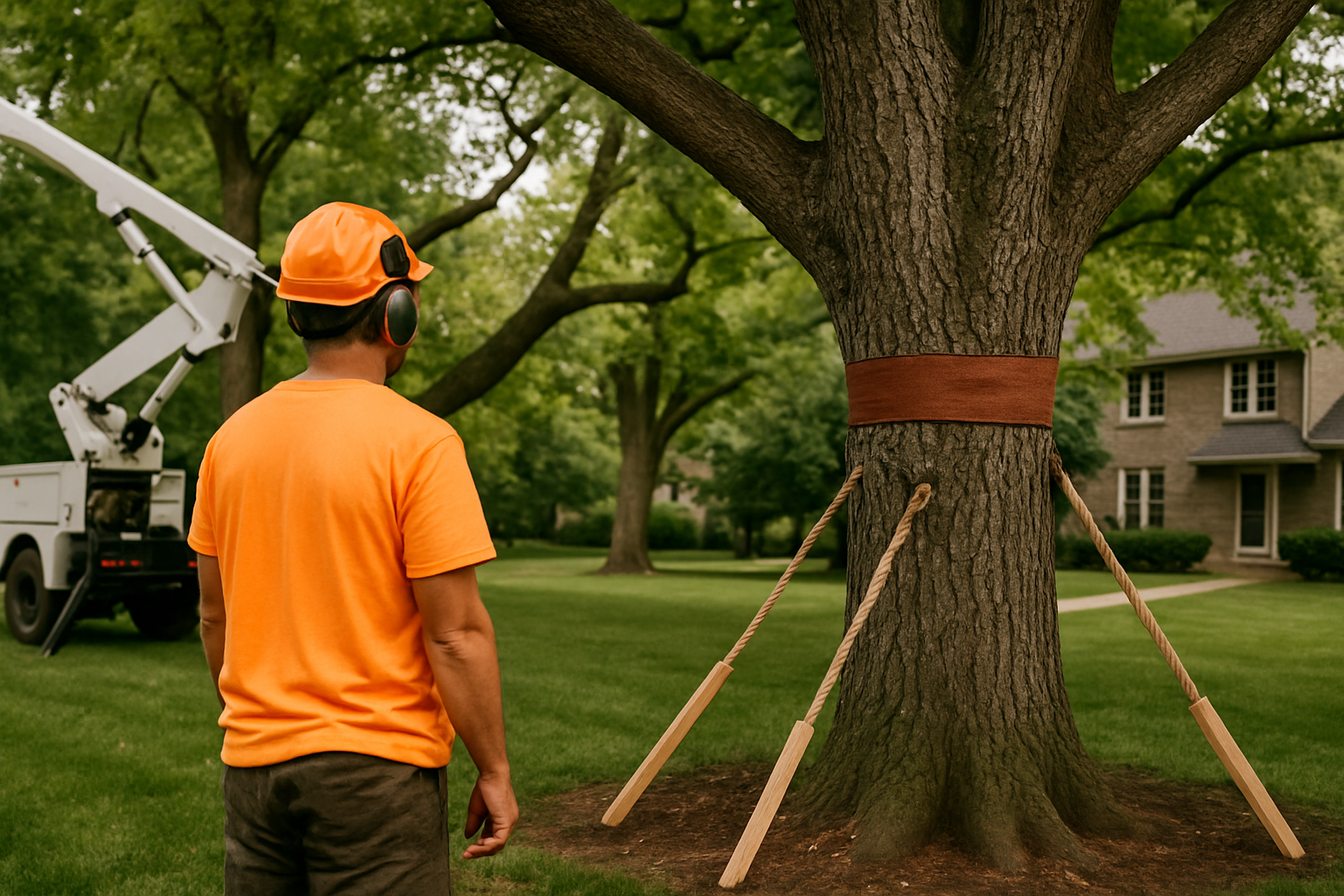
For mature specimens with known split risks, the installation of cabling and bracing systems provides additional support to co-dominant stems.
Planting trees in ‘groves’ of five or more reduces blow-over rates by 33%. Root systems interlock to create a unified subterranean anchor. Implement these strategies and practice how to protect trees from storm damage in Kansas City throughout the year.
The Homeowner’s Storm-Ready Inspection Checklist
Canopy Voids
Check for ‘widow-makers’ or branches that have already snapped but remain lodged.
Trunk Cavities
Look for vertical cracks or fungal growth at the base. This indicates internal decay.
Root Zone
There should be no recent construction or soil compaction occurred within the drip line.
Leaning
Any new or sudden lean needs immediate professional intervention.
Post-Storm Triage: When to Restore vs. When to Remove?
- If a storm has already struck, the ‘50 percent rule’ is the industry standard.
- If more than half of the crown is intact and the main leader remains undamaged, the tree is often salvageable.
- Trees with split trunks or those that have tipped significantly require removal.
Based on Grade-A Tree reviews, homeowners value rapid response and debris clearance to prevent secondary property damage.
Why is Local Arboricultural Expertise Non-Negotiable?
Managing high-risk vegetation requires more than a chainsaw. It demands an understanding of naturally wind-resistant local species, like:
- Bur Oak
- Hackberry
Grade-A Tree Care utilizes ISA-certified techniques. We ensure that every cut promotes compartmentalization - the tree's natural healing process. Professional intervention guarantees that ‘topping’ - a harmful practice that leads to weak regrowth - is avoided in favor of long-term stability.
The Bottom Line
Proactive maintenance is the only proven defense against the volatile Midwestern climate. Invest in professional inspections and structural reinforcements today. Secure your landscape for tomorrow. Master how to protect trees from storm damage in Kansas City so that your property remains a safe, shaded sanctuary for decades to come.
Professional Tree Care in Kansas City
Keep your trees healthy year-round with our Annual Tree Care Program. For $75/year, get expert inspections, pruning advice, and priority scheduling. Serving the Kansas City metro area.
Learn about the Annual Tree Care Program
0 Comments
Add a comment