
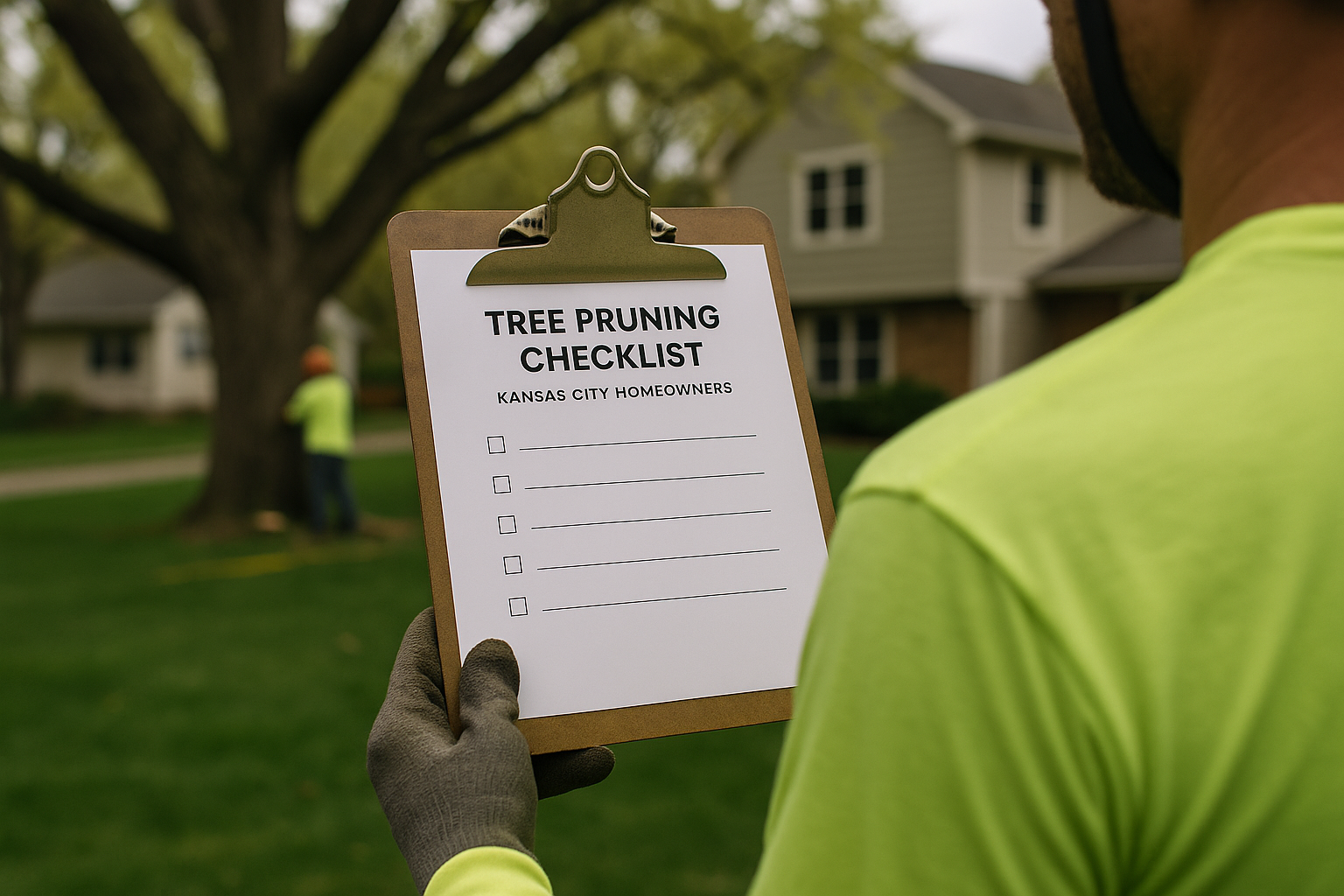
Tree Pruning Checklist for Kansas City Homeowners
by gradeatreeTree Care0 comments
In the high-velocity weather environment of the Midwest, the arboreal assets of a property may change from aesthetic treasures into significant structural liabilities. Maintaining a tree pruning checklist for Kansas City homeowners is no longer just a weekend gardening suggestion. It is a critical protocol for risk mitigation.
Move beyond basic ‘trimming.’ Embrace the science of compartmentalization. Make sure that your landscape remains resilient against the severe cycles of ice storms and humid heatwaves.
What is the Meaning of Tree Pruning?
Pruning is a targeted horticultural intervention. It removes specific woody appendages to optimize a tree's health and structural stability.
Unlike indiscriminate shearing, professional pruning refers to making precise cuts at the branch collar to stimulate the natural healing response of a tree.
When executed by our tree care experts in Kansas City, the process redirects nutrients to the strongest limbs. This ensures that the canopy is balanced and highly aerodynamic to withstand 70-mph straight-line winds.
When to Prune Trees in Kansas?
In landscape longevity, biological timing is the most underrated variable. For the majority of local species, the ‘dormancy window’ between late January and March is optimal. During this phase, pruning allows for maximum visibility of the architecture of the tree. This also prevents the transmission of aggressive pathogens. Such as:
- Oak Wilt
- Dutch Elm Disease
Such issues are dormant during the freeze. Therefore, strategic pruning in late winter ensures that the tree can dedicate its entire spring growth surge to ‘callusing over’ the pruning sites before the summer pest season begins.
Tree Pruning Checklist For Kansas City Homeowners
To maximize your canopy's life, follow our data-driven inspection and action guide. This systematic approach guarantees that no structural flaw becomes a storm-season casualty.
Priority Level
Action Item
Technical Objective
Critical
Remove the '3 Ds'
Cut out Dead, Damaged, or Diseased wood to stop rot.
Structural
Eliminate V-unions
Prune co-dominant stems to prevent splitting under ice.
Safety
Utility clearance
Ensure a 10-foot buffer from power lines and structures.
Vitality
Thinning the crown
Improve airflow to reduce fungal ‘powdery mildew’ risks.
V-Union Correction
Identify where two trunks compete. Remove one to establish a single ‘central leader.’
Sucker/Water Sprout Removal
Prune the rapid, vertical growth at the base that drains vital energy.
Clearance Management
Maintain vertical clearance for sidewalks (8ft) and driveways (14ft).
Pest Monitoring
Use your tree pruning checklist for Kansas City homeowners to look for D-shaped exit holes (Emerald Ash Borer) or bagworm spindles during the process.
The Bottom Line
Proactive arboriculture is more cost-effective than emergency storm cleanup. A homeowner can handle small-diameter maintenance. But, a large-scale canopy thinning requires the specialized rigging and ANSI-certified safety protocols practiced by Grade-A Tree Care.
As noted in several Grade-A Tree reviews, professional intervention saves the tree and protects the surrounding property value. Consistently apply a tree pruning checklist for Kansas City homeowners to ensure your landscape remains a legacy for the next generation.
Professional Tree Care in Kansas City
Keep your trees healthy year-round with our Annual Tree Care Program. For $75/year, get expert inspections, pruning advice, and priority scheduling. Serving the Kansas City metro area.
Learn about the Annual Tree Care Program
0 Comments
Add a comment