
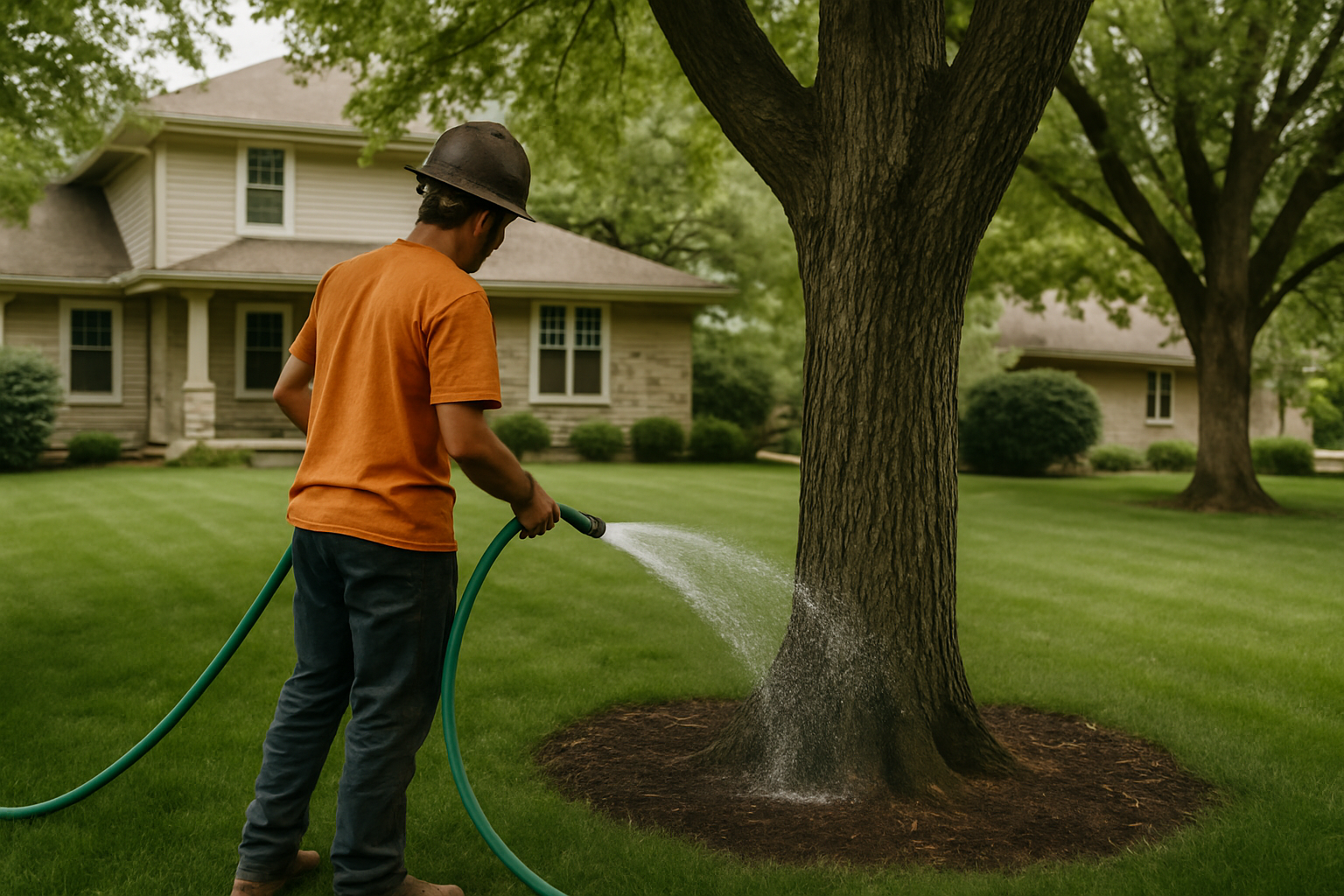
Watering Your Trees: Summer Tree Care Tips for Kansas City Homeowners
By Phil Giordano, Founder and ConsultantUpdated Tree Care0 comments
Summers in Kansas City can be intense. High temperatures, limited rainfall, and long dry spells can stress even the most established trees. While trees are resilient, they are not immune to drought, heat, or poor watering habits. In fact, improper watering is one of the most common summer tree care mistakes homeowners make.
Whether you’ve recently planted new trees or are caring for mature specimens, knowing how to water them properly is key to keeping them healthy, strong, and beautiful during the hottest part of the year.
Kansas City's Clay Soil Changes How You Should Water
Much of the Kansas City metro sits on dense clay subsoil, which behaves very differently from sandy or loamy soil when it comes to watering. Clay holds water longer but drains slowly, so the water deeply and infrequently rule matters even more here. Frequent shallow watering on clay often just sits on the surface and evaporates rather than reaching the root zone. If you're watering on a timer or irrigation system set up for a different soil type, adjust the schedule for clay: longer, less frequent sessions rather than daily short ones.
Is Your Tree Underwatered or Overwatered? Quick Diagnostic
The two problems look similar but need opposite fixes:
| Sign | Underwatered | Overwatered |
|---|---|---|
| Leaves | Curling, crispy edges, drooping | Yellowing, soft/mushy texture |
| Soil | Dry, hard, pulls away from pot/trunk | Waterlogged, smells sour |
| Leaf drop | Gradual, starting at branch tips | Sudden, whole branches at once |
| New growth | Stunted or absent | Present but weak, wilts quickly |
If you're not sure which one you're seeing, check soil moisture 3–4 inches down before adjusting your watering. Guessing wrong makes the problem worse.
Why Proper Watering Matters
During summer, trees lose water quickly through their leaves in a process called transpiration. When that water is not replenished, trees become stressed. This can lead to:
- Slow or stunted growth
- Wilting or browning leaves
- Early leaf drop
- Increased vulnerability to pests and disease
Even native and well-established trees throughout the Kansas City area may need additional watering during periods of heat or drought.
How Much Water Do Trees Need in Summer?
As a general guideline:
- Young trees (planted within the last three years) need about 5 to 10 gallons of water per week
- Established trees need roughly 1 inch of water per week, including rainfall
During extended periods of drought, all trees may require deeper, more frequent watering.
Best Practices for Summer Tree Watering
Water Deeply and Infrequently
The goal is to soak the root zone, not just the surface. Shallow watering encourages shallow root growth, which leaves trees more vulnerable in dry conditions. Use a soaker hose or allow a garden hose to trickle slowly at the base of the tree for 30 to 60 minutes.
Water in the Early Morning or Evening
Watering during cooler times of day reduces evaporation and allows the moisture to soak deeper into the soil.
Focus on the Drip Line
Water near the drip line—the area beneath the outer edge of the tree’s canopy—where the fine feeder roots are most active.
Common Watering Mistakes to Avoid
It’s just as important to know what not to do when watering trees:
- Overwatering: Too much water can suffocate roots, especially in Kansas City’s clay-heavy soil.
- Frequent, shallow watering: This leads to weak, surface-level roots.
- Watering at the trunk: Roots spread outward and downward; watering too close to the trunk is ineffective.
Neglecting to monitor soil moisture: Check before watering. Wet soil means your tree doesn’t need more water yet.
Use Mulch to Support Tree Health
Mulching helps retain moisture, regulate soil temperature, and reduce weed competition. Apply 2 to 3 inches of mulch in a wide ring around the base of the tree, but be sure to keep mulch 2 to 4 inches away from the trunk to avoid trapping moisture against the bark.
How to Tell If Your Tree Needs Water
Here are a few easy ways to monitor moisture levels:
- Soil test: Insert a screwdriver or soil probe into the ground. If the soil feels dry more than a few inches down, it's time to water.
- Leaf signs: Watch for wilting, curling, or browning at the edges.
- Early leaf drop: If trees are shedding leaves too early, it could be due to water stress.
Need Help with Tree Care This Summer?
Proper watering is only one part of keeping your trees healthy through the summer. If you're unsure whether your trees are getting the care they need, Grade-A Tree Care can help. Our Plant Health Care Program includes tree and soil inspections, drought assessments, and customized care plans that are tailored to the Kansas City climate.
Call 816-214-6255 or visit gradeatree.com to schedule a free consultation.
Professional Tree Care in Kansas City
Keep your trees healthy year-round with our Annual Tree Care Program. For $75/year, get expert inspections, pruning advice, and priority scheduling. Serving the Kansas City metro area.
Learn about the Annual Tree Care Program
0 Comments
Add a comment